
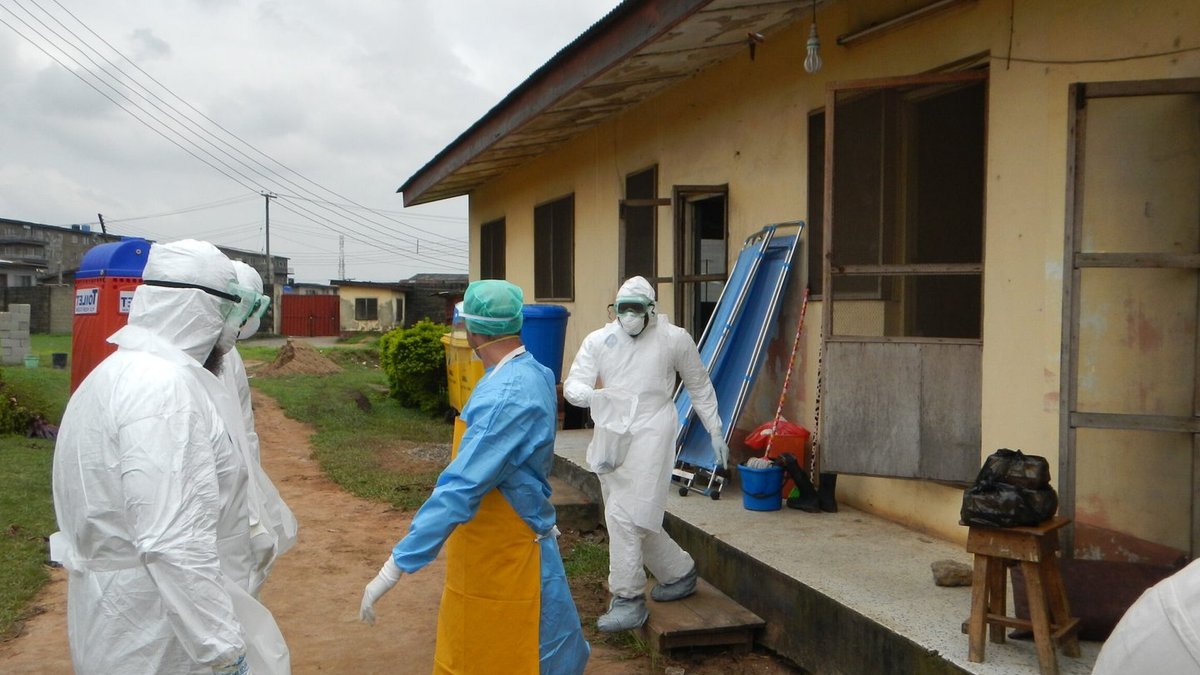
Nigeria recorded its first confirmed case of Bundibugyo virus disease on 20 October 2024, twelve years after the country was declared free of Ebola transmission. The imported case, discovered in Abuja, represents the first detection of this rare Ebola variant in Nigeria. As international travel has resumed, health authorities now confront the task of stopping further spread through rapid detection and rigorous infection control.
First Response: Can Clinics Recognize the Risk?
Medical personnel, from front desk staff to doctors, must quickly identify symptoms and arrange appropriate care. The World Health Organization (WHO) stresses that infection prevention and control (IPC) measures—including hand hygiene, proper waste disposal, and the use of personal protective equipment—are essential. Clinicians should inquire about recent travel, as early symptoms may resemble those of other illnesses. Suspected cases must be isolated immediately, reported to authorities, and coordinated with Nigeria’s national public health institute.
Kenya’s recent Bundibugyo outbreak offers a relevant comparison. By 20 October, Kenya had documented nine confirmed cases, including one fatality, all stemming from a single individual. Effective contact tracing and quarantine measures limited further transmission, although healthcare workers were among those infected.
Unlike the more widely recognized Ebola virus, no approved vaccine exists for Bundibugyo. While Ervebo, the vaccine for Ebola virus disease, is being tested in the Democratic Republic of Congo, its effectiveness against Bundibugyo remains unproven. WHO guidelines currently restrict its use to research settings. Treatment depends on supportive care, requiring trained personnel and monitoring equipment in treatment facilities.
Investments in IPC: Gaps Remain Despite Progress
Nigeria’s response draws on lessons from the 2014 Ebola outbreak, when weaknesses in infection control contributed to healthcare worker fatalities. In 2019, the Nigeria Centre for Disease Control (NCDC) launched Turn Nigeria Orange, a national IPC initiative now operating in 41 tertiary hospitals nationwide. However, a 2023 Joint External Evaluation (JEE) revealed ongoing issues: uneven implementation of IPC measures, insufficient funding, and a shortage of dedicated staff in both public and private facilities.
The evaluation points to a gap between establishing programs and ensuring their consistent application. States must now demonstrate progress since the last review and specify what additional support is required to strengthen IPC across all healthcare settings. Without staff assigned to oversee these programs, even well-funded initiatives may fail at the point of delivery.
Private healthcare providers, which handle a large portion of Nigeria’s medical consultations, pose a particular concern. Both Nigeria’s first Ebola patient in 2014 and the recent Abuja case were treated in private hospitals. Early visits to these facilities may occur before Ebola is suspected, raising the risk of undetected spread.
Sustaining Preparedness Beyond the Outbreak
The Global Fund’s COVID-19 Response Mechanism (C19RM) grant has bolstered laboratory capacity, disease surveillance, and IPC training, but maintaining these improvements is uncertain. States must now verify whether these investments have enhanced their ability to detect infections early and safeguard both patients and medical staff. The NCDC’s advisory from 28 May urged states to evaluate public and private facility readiness within 72 hours, creating a baseline for focused assistance.


