
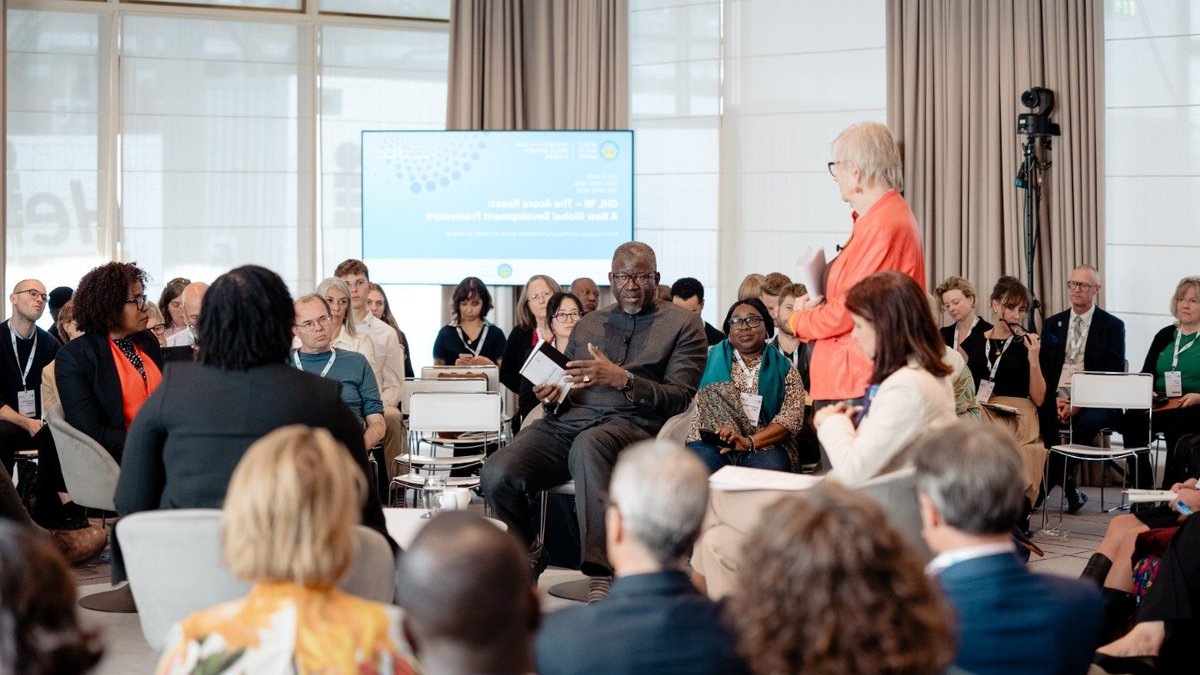
Nigeria’s health sovereignty is being put to the test, with funding and accountability at the forefront of the global health reset. In early 2025, the United States’ pause on foreign assistance raised concerns about funding gaps in health programs, prompting Nigeria to include a provision of about US$200 million in its budget to address these gaps.
In February, the National Assembly approved the budget. By December 2025, Nigeria and the United States had finalized a five-year health cooperation agreement worth US$5.1 billion through a memorandum of understanding (MoU). The Federal Ministry of Health and Social Welfare expects the United States to contribute nearly US$2 billion in grants. This funding spans from April 2026 to December 2030.
Health Financing Under Scrutiny
The MoU has drawn attention to Nigeria’s health financing. They also ask how partner funds integrate with national and state plans. Another concern is whether the money actually improves services. These issues were debated at the 2026 World Health Summit in Berlin. The summit focused on health innovation and building resilience.
Accra Reset Gains Momentum
Ghana’s President John Dramani Mahama champions the Accra Reset, which advocates for collaborative efforts that empower nations to have greater control over their priorities and implementation strategies. During the unveiling of the report titled ‘A Sovereign Future for Health,’ Mahama showed the significance of accountability, asserting that ‘No ownership without control’ and ‘no control without absolute accountability.’
Nigeria already has a framework for this work. The Federal Ministry of Health and Social Welfare uses a Sector-Wide Approach (SWAp). This aligns federal, state, and local governments with development partners. It also unifies stakeholders under one national plan, budget, and reporting system. The Health Sector Renewal Compact was signed in 2023 and expanded in 2025. The challenge now is ensuring transparency so citizens can track commitments and results.
Practical Tests for the Reset
Nigeria can judge the Reset against three practical tests: whether partner money follows Nigeria’s plan, whether the money reaches the clinic, and who holds the government to account. Shingai Machingaidze, adviser to the Accra Reset Secretariat, noted that Global Fund grants and funding requests alone create 10 separate interfaces in Nigeria, highlighting the need for greater transparency and coordination.
Dr. Kalipso Chalkidou, WHO’s Director of Performance, Financing, and Delivery, asked why global health initiatives ignore Nigeria’s SWAp. She stressed the need to identify and resolve this issue. To improve transparency and accountability, Nigeria should disclose each partner’s share of health funding. This must be visible in the budget and Treasury records.
Nigeria’s Health Budget Falls Short
The 2026 federal budget allocates about ₦2.506 trillion to the Federal Ministry of Health and Social Welfare. This represents 3.67% of total spending. That falls far below the 15% target set by the Abuja Declaration. Ghana’s Health Minister, Kwabena Mintah Akandoh, noted that effective health systems depend on service availability.
For Nigeria, the critical assessment lies in whether funds are not only allocated but also released and utilized, and whether healthcare facilities are equipped with the necessary staff, medications, diagnostics, water, electricity, and referral capabilities to deliver care. The government must assume primary responsibility for health financing, with development partners providing supplementary support that aligns with national and state health priorities, and publicly disclosing their commitments and disbursements.
According to Professor Catherine Kyobutungi, Executive Director of the African Population and Health Research Center (APHRC), accountability should examine not only results but whether governments and partners uphold sovereignty, subsidiarity, and country ownership. Anna Liakopoulou of the International Federation of Medical Students Associations added that young people’s influence is one warning sign, with policy formulation accounting for fewer than 3% of responses from 112 young people surveyed.
The initial focus should be on federal and state governments financing the health sector and regularly publishing comparable data on health allocations, releases, expenditures, and agreed service-delivery indicators. While there is increased transparency in federal disbursements under the Basic Health Care Provision Fund (BHCPF), the allocation and utilization of these funds at the state level remain less clear. The Joint Annual Reviews should evaluate progress, identify delays, and establish time-bound corrective actions.
Prioritizing Health Financing
Governments must prioritize health financing. They must publish commitments and disbursements clearly. Reports should show which funds are planned, budgeted, and routed through government systems. The National Assembly should use these reports to monitor budget execution. Civil society and communities must compare published commitments with local healthcare services.
Nigeria has pledged to allocate at least 6% of executed federal and state budgets to health. This exceeds projected growth in health spending. The Ministry estimates this could raise nearly US$3 billion over the same period. The MoU with the U.S. will provide nearly US$2 billion in grants from April 2026 to December 2030.
The government must take the lead in funding health. Development partner support should complement public investment. They must publish commitments and disbursements transparently.


