
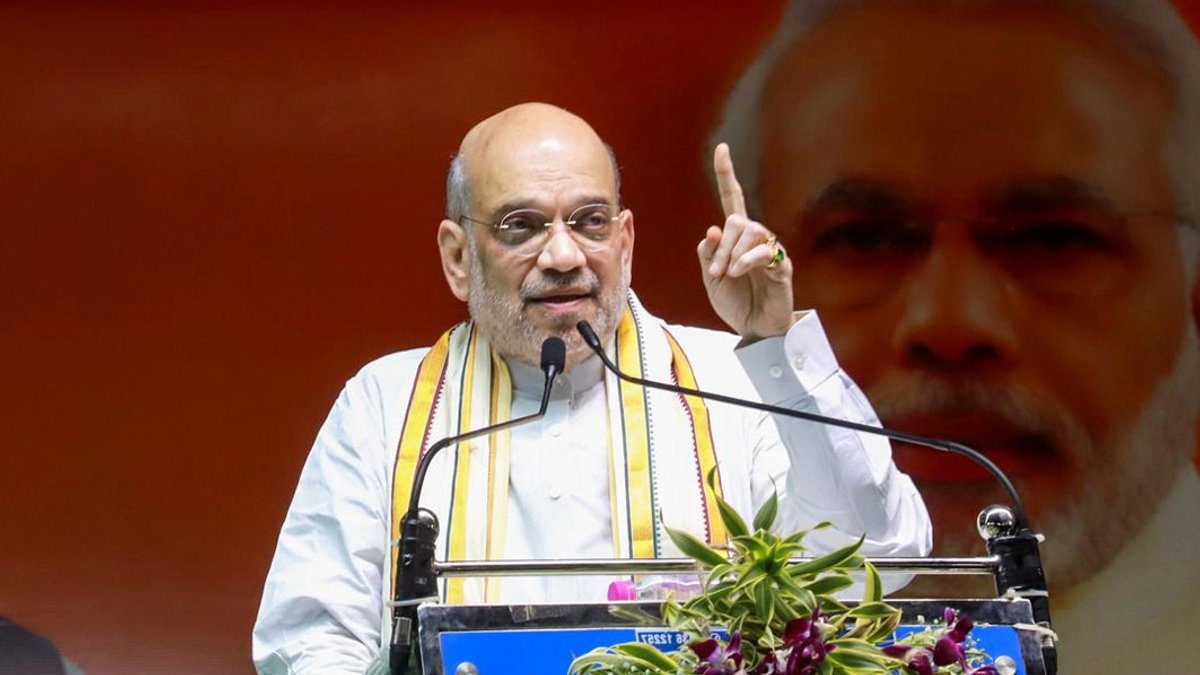
Home Minister Amit Shah announced that Kashmir is now free of locally born terrorists for the first time in 35 years. Speaking at a counter-terrorism conference in New Delhi, he credited the government’s zero-tolerance policy for this milestone. The declaration was met with applause from the audience, many of whom had followed the region’s security challenges for decades.
The minister highlighted the elimination of Lashkar terrorist Latif Bhat as a significant achievement. He emphasized the role of Prime Minister Narendra Modi’s leadership in adopting a uniform anti-terror strategy across the country.
A Unified Approach to Fighting Terrorism
He noted that while state police forces have made efforts, a lack of coordination previously hindered progress. A uniform strategy is now being implemented down to the level of every police station, covering the entire nation from Kashmir to Kanyakumari.
Read Also: Wedding Guest Outfits Tailored to Venue and Dress Code
This shift includes the banning of the Shahzad Bhatti network under the Unlawful Activities (Prevention) Act (UAPA). More than 40 modules of the network have been dismantled across India, leading to 271 arrests and over 100 cases. The crackdown disrupted supply chains and communication lines that had supported extremist cells for years.
Bringing Fugitives to Justice
He highlighted the government’s success in returning 303 fugitives from 36 countries since 2019. The effort was praised as a collaborative triumph involving the CBI, the Home Ministry and multiple intelligence agencies. Families of victims expressed relief that long-standing cases were finally moving toward closure.
The NIA Act was amended in 2019 to expand its jurisdiction, and the UAPA was revised to allow the NIA to seize terrorist properties and label individuals as terrorists. A unified action plan to counter radicalization was also finalized in that year, which later contributed to the dismantling of the PFI network in 2022.
Read Also: Wellness Focus Shifts to Prevention, Self-Care for Busy Adults
Strengthening Border Security and Capabilities
He outlined a new approach to border security, which includes the removal of illegal religious structures along borders and improved inter-agency coordination. The minister stressed that agencies must enhance their operational capabilities and target terror financing. These measures aim to close loopholes that militants have exploited to move personnel and money across frontiers.
He also stressed the importance of a proactive counter-terrorism policy, focusing on both structural and operational capabilities. Advocacy for a Quadrangular Regional Security Grid in border states and stronger ATS units across all states was part of the broader vision. The proposed grid is designed to enable rapid information sharing among neighboring jurisdictions.
The conference was attended by senior officials, including Minister of State for Home Affairs Bandi Sanjay Kumar, Home Secretary Govind Mohan, and Director of the Intelligence Bureau Dr. Mahesh Dikshit. Their presence showed the high-level commitment to sustaining the momentum generated by recent successes. The gathering concluded with a pledge to review progress quarterly and adjust tactics as needed.


