
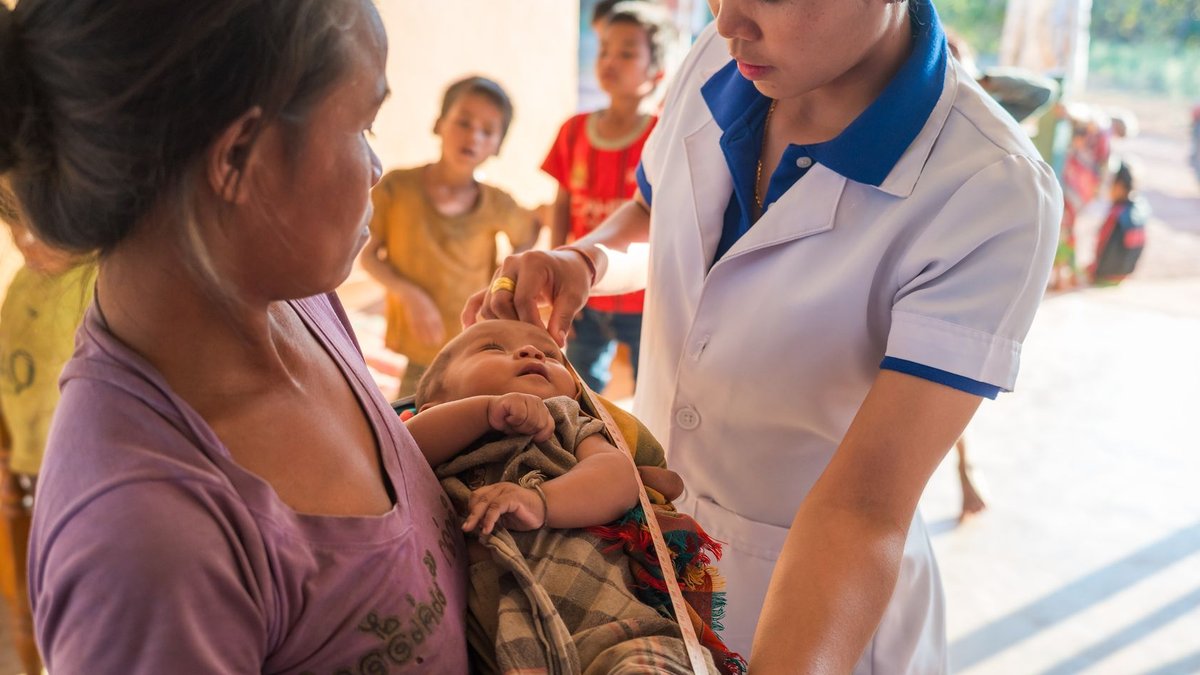
Nigeria’s policies, programs, and international pledges aim to cut maternal and child deaths, yet the country lacks the trained staff to deliver that care. Its maternal mortality rate remains among the world’s highest, with 993 deaths per 100,000 live births—accounting for nearly 28.5% of all global maternal deaths. A Nigerian woman faces an estimated 1 in 19 lifetime risk of dying during pregnancy, delivery, or the postpartum period.
The shortage isn’t due to a lack of health professionals in training. Nigeria graduates thousands of nurses, midwives, and doctors annually, but many remain unemployed or leave the country. This disconnect between training output and deployment was a key focus at the 2026 World Health Summit in Berlin, where experts highlighted Africa’s workforce crisis: the continent holds 16% of the global population while bearing 25% of the disease burden, yet employs only 4% of the world’s health workers.
Dr. Thomas Zapata, Director of the WHO Academy in Lyon, showed the severity of the gap. Africa averages just 1.55 health workers per 1,000 people, far below the 4.45 needed for universal health coverage. Nigeria’s ratio is even lower—2.9 doctors per 10,000 people, meaning one physician serves 3,474 citizens. The global health worker shortfall is projected to reach 11 million by 2030, with 70% of that deficit concentrated in Africa and the Eastern Mediterranean. By comparison, Europe has 13 times as many doctors and six times as many nurses per capita as Africa.
Africa’s trained health workers sit idle
Increasing training alone hasn’t resolved the issue. Dr. James Avoka Asamani, WHO AFRO’s Health Workforce Team Lead, noted that Africa’s training capacity has more than doubled in the past decade. Yet nearly 1 million trained health workers remain unemployed or underemployed while facilities stay understaffed. He attributed the problem to a labor market failure, a mismatch between population needs, available resources, and spending priorities.
Nigeria’s situation reflects this paradox: it produces thousands of health workers each year, but poor salaries, harsh working conditions, and unfilled posts drive many abroad. The exodus, known locally as “Japa,” surged in 2024, with 4,193 doctors and dentists emigrating. Summit data revealed that 17,000 Nigerian doctors and 55,000 Nigerian nurses now work in OECD countries, positioning Nigeria as the second-largest source of doctors and the largest source of nurses among nations on the WHO’s health workforce safeguards list.
The brain drain stems from push and pull factors. Domestically, health workers face overwhelming workloads, low pay, and limited career advancement. Abroad, aging populations in high-income nations create demand: in Europe, 31% of doctors are over 55, rising above 40% in Italy, France, Spain, and Germany, while fewer young people enter these professions. This cycle leaves Nigeria with a dwindling workforce while struggling to retain those who remain.
Task shifting and fair pay needed now
Throwing more money at the problem won’t suffice. Dr. Githinji Gitahi, CEO of Amref Health Africa, argued that countries must overhaul their delivery models. Nurses, who make up 70% of the health workforce and 60% of the wage bill, are often underutilized, while doctors, who account for just 4% of the workforce and 11% of wages, dominate decision-making. Prevention strategies, task shifting, and expanded roles for community health workers must take center stage.
Asha Mutesi Rajab, a youth community health worker from Nairobi, described a typical scenario: paying transport fares for pregnant women who couldn’t afford antenatal care. Her message to policymakers was direct: Don’t give CHWs (Community Health Workers) more responsibilities. Give us the capacity to carry out these responsibilities. She demanded fair pay, supervision, and defined career paths, basic needs still unmet for many.
Midwifery represents one of the most cost-effective ways to reduce maternal and newborn deaths, yet it remains severely underfunded. Jacqueline Dunkley-Bent, Chief Midwife of the International Confederation of Midwives, explained that midwife-led care requires funding aligned with the model, workforce support, and government accountability. Too often, resources follow hospital activity, such as occupied beds, rather than prevention. Chronic understaffing makes midwife-led models seem ineffective, despite evidence proving their success.


