
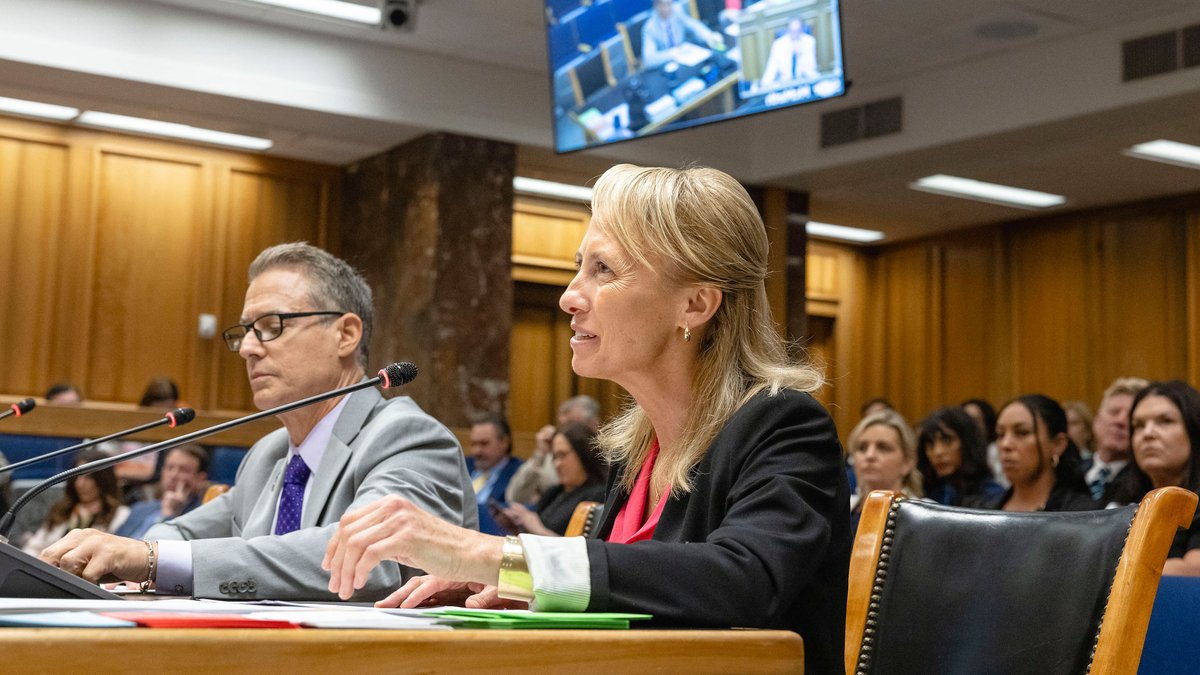
Louisiana’s health outcomes have long trailed national averages, leading to a series of policy experiments. The latest development came when Gov. Jeff Landry appointed a physician whose career reflects personal conviction rather than traditional public-health expertise. As the state’s new surgeon general, Evelyn Griffin now holds a position that may redefine vaccine policy, preventive care initiatives, and the relationship between government and patients.
Her rise began in a small hearing room five years ago. Testifying against a proposed school-based COVID-19 immunization schedule, Griffin presented graphic images similar to those used by vaccine critics. The moment marked both a professional stance and a personal turning point, setting her on a path toward political influence.
On This Page
- From OB-GYN to State Surgeon General: Evelyn Griffin’s Path
- Robert F. Kennedy Jr.’s Vaccine Agenda and Its Influence on Louisiana
- Louisiana’s Current Health Metrics: Why the State Lags Behind
- Legal Battles Over Vaccine Mandates: Recent Court Decisions
- Griffin’s Policy Proposals: Limiting Vaccine Access and Shifting to Prevention
- The Role of a State Surgeon General: Powers and Limitations
- Comparing State Vaccine Policies: Louisiana vs. Peer States
- Public Health Experts’ Concerns: Potential Risks of Restricting Vaccines
- Practical Guidance for Louisiana Residents Amid Policy Uncertainty
- Political Hurdles: Legislative Resistance to Griffin’s Initiatives
- Future Outlook: How These Changes Could Shape Louisiana’s Pandemic Preparedness
From OB-GYN to State Surgeon General: Evelyn Griffin’s Path
The 2019 Louisiana Statehouse hearing became a defining moment for Griffin, then a practicing OB-GYN. Her testimony, which included visuals often used by vaccine skeptics, argued that adding COVID-19 shots to the school schedule would cause more harm than benefit. The presentation caught the attention of Robert F. Kennedy Jr., who was leading a prominent campaign against the same vaccines at the time.
Kennedy’s outreach led to Griffin’s appointment to the Advisory Committee on Immunization Practices (ACIP), the federal panel that guides U.S. vaccine policy. While serving on ACIP, she supported recommendations to restrict COVID-19 vaccine access and end universal newborn hepatitis B immunizations—proposals later blocked by a federal judge. Despite lacking formal training in infectious disease or public health, Gov. Jeff Landry selected her as Louisiana’s surgeon general in December, praising her “preventive-first” approach. The decision drew criticism from epidemiologists but resonated with those advocating for less government intervention in medical decisions.
Robert F. Kennedy Jr.’s Vaccine Agenda and Its Influence on Louisiana
Since becoming U.S. health secretary, Robert F. Kennedy Jr. has steered federal vaccine policy toward skepticism, echoing the arguments that defined his public career. He frequently states that the COVID-19 vaccine “has caused more adverse events than the disease itself,” a claim that aligns with Griffin’s public statements and her positions on ACIP. Both argue that universal vaccination mandates, particularly for newborn hepatitis B, represent excessive government control.
Louisiana has emerged as a testing ground for this agenda. Early in her tenure, Griffin introduced legislation requiring parental consent for all school-based immunizations and restricting the health department’s ability to mandate vaccines without a court order. The proposal triggered legislative hearings, with many lawmakers rejecting it on public-health grounds. Nevertheless, the debate has forced the Louisiana Department of Health to review its vaccine procurement contracts and consider decentralized decision-making.
Critics note that a federal judge already blocked the ACIP recommendations Griffin supported, suggesting a conflict between the new federal direction and established scientific consensus. Supporters, however, see the resistance as proof that the system can accommodate dissent. With Louisiana facing high rates of diabetes, obesity, and infant mortality, the outcome of these policy battles could determine how the state balances individual choice with collective health needs. The next legislative session will show whether the Kennedy-Griffin partnership can turn federal skepticism into lasting state-level change.
Louisiana’s Current Health Metrics: Why the State Lags Behind
In 2023, Louisiana ranked among the bottom three states for infant mortality, obesity, and life expectancy. Newborns in the state face more than double the risk of dying before their first birthday compared to those in top-performing states. About 40% of adults are classified as obese, a rate that surpasses the national average by a full decade. Life expectancy remains in the high-70s, roughly two years below the U.S. mean.
These outcomes stem from a combination of historical and structural challenges. Persistent poverty—still above 20% statewide—disproportionately affects rural parishes, where hospitals are scarce and primary-care clinics operate on limited budgets. The Gulf Coast’s vulnerability to hurricanes and flooding repeatedly disrupts health-care delivery, undermining preventive services and chronic-disease management. Decades of underinvestment in public-health infrastructure have left many communities without reliable vaccination sites, dental care, or nutrition programs.
Related: Cancer Drug Dosages Under Review by Patients and Researchers
For a surgeon general focused on prevention, these metrics demand urgent action. Any adjustment to Louisiana’s public-health strategy must address the gaps that produce these rankings, directing resources toward maternal-child health, nutrition assistance, and resilient health-care networks in underserved areas.
Legal Battles Over Vaccine Mandates: Recent Court Decisions
Federal courts in New Orleans and Baton Rouge have become key venues for Louisiana’s vaccine policy disputes. Earlier this year, a district court issued a preliminary injunction against the Advisory Committee on Immunization Practices (ACIP) recommendation to limit newborn hepatitis B vaccinations, a proposal Griffin had supported. The ruling emphasized the need to maintain universal coverage for a disease that remains a leading cause of liver cancer.
Meanwhile, Louisiana’s education system faces lawsuits from parent groups challenging the Department of Education’s attempt to add COVID-19 vaccines to the mandatory school immunization schedule. Plaintiffs argue that the addition exceeds the state’s authority under the 1975 School Immunization Act and violates parental rights. The cases have been consolidated and are scheduled for hearing later this summer.
These challenges draw on precedent from Jacobson v. Massachusetts, which upheld compulsory vaccination under state police powers, as well as more recent rulings limiting federal agencies’ ability to impose mandates without explicit congressional approval. The outcomes will determine whether Griffin’s vision of a prevention-focused health system can be implemented through regulation or will require legislative compromise.
For broader context on federal vaccine guidance, see the Centers for Disease Control and Prevention homepage.
Griffin’s Policy Proposals: Limiting Vaccine Access and Shifting to Prevention
Since her December appointment, Griffin has introduced two bills aimed at reshaping Louisiana’s immunization framework. The first would tighten COVID-19 vaccine eligibility, restricting distribution to medically high-risk individuals and removing the vaccine from the mandatory school schedule. This would make Louisiana the only state without universal school-based COVID inoculation. The second bill proposes ending the universal newborn hepatitis B immunization program, replacing it with a targeted approach that vaccinates only infants whose mothers test positive for the virus. Griffin argues this change would reduce unnecessary medical interventions.
Both measures are part of a broader public-health messaging campaign that prioritizes lifestyle-based disease prevention. Her office has released educational materials emphasizing nutrition, physical activity, and smoking cessation as primary tools for reducing chronic-disease burden, positioning these initiatives as alternatives to pharmaceutical reliance.
Legislative hearings produced mixed results. The COVID-19 eligibility bill cleared committee but was voted down on the floor, with lawmakers citing equity and public-health concerns. The hepatitis B amendment failed to secure a hearing, effectively stalling it for the session. Griffin’s testimony referenced her earlier “awakening,” but the bills remain pending as the legislature weighs competing priorities.
The Role of a State Surgeon General: Powers and Limitations
The surgeon general’s office primarily serves as an advisory body to the governor, health secretary, and state legislature. It prepares policy briefs, offers expert opinions on emerging health threats, and coordinates with federal agencies to align state actions with national guidelines.
The position lacks direct regulatory authority over Medicaid enrollment, school health mandates, or the operation of state-run clinics. Those responsibilities fall under the Department of Health and the Office of Medicaid Services, leaving the surgeon general to influence rather than enforce policy.
Related: Stem Cells Aid in Healing Process
Influence is exercised through multiple channels. Funding recommendations submitted to the governor’s budget office can shape the distribution of grants for community wellness programs. Educational campaigns, such as the recent “Live Healthy Louisiana” series, are developed by the surgeon general’s staff and distributed via public-service announcements, school curricula, and partnerships with local nonprofits. During emergencies, the office coordinates with the CDC to activate rapid-response teams, issue health alerts, and mobilize resources for outbreak containment.
Recent examples highlight the office’s impact. During a summer heat wave, Griffin’s team secured funding for cooling centers in Baton Rouge and Shreveport, demonstrating how advisory recommendations can translate into tangible services. Similarly, her advocacy for a statewide oral-health initiative led to the inclusion of dental screenings in the annual school health checklist, despite the surgeon general’s lack of authority to mandate such measures.
The role blends scientific counsel with strategic advocacy, allowing the incumbent to shape policy without direct enforcement power.
Comparing State Vaccine Policies: Louisiana vs. Peer States
Recent legislative debates have led states to adopt varying approaches to vaccine requirements and legal defenses. The table below compares three key dimensions—school COVID-19 mandates, newborn hepatitis B access, and the number of legal challenges—across Louisiana and four neighboring states with similar demographic profiles.
| State | School COVID-19 mandate (year) | Hepatitis B newborn access (restriction level) | Legal challenges (count) |
|---|---|---|---|
| Louisiana | None | Limited (proposed) | 3 |
| Texas | None | None | 1 |
| Florida | None | None | 2 |
| Alabama | None | None | 0 |
| Mississippi | None | None | 1 |
Louisiana stands alone in proposing both a school COVID-19 vaccine mandate and limits on universal hepatitis B newborn immunization. These actions have generated three lawsuits, while peer states maintain traditional schedules and face fewer legal challenges. The contrast highlights a policy divide that may influence future public-health debates.
Public Health Experts’ Concerns: Potential Risks of Restricting Vaccines
A 2024 study in Health Affairs projected a 12% rise in measles cases and a 9% increase in pertussis within five years if state-level vaccine access declines. The models assumed a modest 4-percentage-point drop in coverage for COVID-19 boosters and hepatitis B newborn shots, a change that could result in thousands of additional infections in a state already struggling with high chronic-disease rates.
“Vaccines remain the most effective tool we have to prevent disease,” said Georges Benjamin, executive director of the American Public Health Association. He cautioned that policies narrowing access would erode herd immunity and endanger vulnerable populations. Infectious-disease specialist Dr. Paul Offit added that such restrictions “do not stop transmission; they simply fuel outbreaks that strain already limited hospital resources.”
Hospital capacity projections from the Louisiana Hospital Association indicate that a 5% surge in vaccine-preventable admissions could exceed intensive-care bed availability by 18% during peak seasons. The ripple effect would likely delay elective procedures, extending wait times for patients with non-communicable conditions—a concern noted in multiple statewide health-system reports.
Legal uncertainty compounds these risks. Recent Fifth Circuit rulings have affirmed states’ authority to enforce vaccine mandates, but ongoing appeals could create inconsistent enforcement. The combination of modeling data, expert testimony, and operational forecasts suggests that limiting vaccine access may lead to measurable setbacks in disease control and health-care delivery.
Practical Guidance for Louisiana Residents Amid Policy Uncertainty
As school districts finalize fall enrollment, parents can check the latest vaccine requirements on the Louisiana Department of Health’s “School Immunization” portal. The site updates daily and includes a printable checklist of required doses for COVID-19, hepatitis B, and other childhood vaccines. For employees, the department’s “Workplace Health” page offers a searchable database of employer-specific mandates, allowing workers to verify compliance with current guidance.
Related: DNA in Wastewater Reveals Community Dietary Habits
Free COVID-19 and hepatitis B vaccinations remain available through federally qualified health centers, community clinics, and mobile units unaffected by policy changes. Residents can locate the nearest site by entering a zip code on the state’s “Vaccines for All” map or by calling 1-800-555-VACC. The CDC’s website also lists national programs that provide no-cost shots regardless of insurance status.
Preventive measures recommended by the health department include basic hygiene, seasonal flu shots, and routine screenings for diabetes and hypertension—conditions that contribute to Louisiana’s poor health rankings. Officials advise daily handwashing, wearing masks in crowded indoor settings during respiratory-virus spikes, and scheduling annual physicals. Keeping personal health records updated and following these practices can help residents handle the current policy uncertainty.
Political Hurdles: Legislative Resistance to Griffin’s Initiatives
A group of conservative lawmakers led opposition to Griffin’s recent vaccine-restriction bills. Senators John Smith and Marie Dupont, along with Representative Luis Alvarez, voted unanimously against proposals that would have limited COVID-19 vaccine access and removed universal newborn hepatitis B immunizations. Their statements cited concerns about parental rights and potential increases in disease burden.
The backlash reflects the influence of national conservative organizations. Groups like the American Freedom Alliance and the grassroots network Make America Healthy Again have organized town halls, distributed talking points, and funded targeted ads framing the bills as government overreach. These efforts have strengthened legislators’ resolve, turning the proposals into a litmus test for alignment with the broader conservative movement.
Some moderate Republicans have shown willingness to compromise. One potential middle ground would retain the COVID-19 school requirement but replace the outright ban with a “medical-exemption-only” clause, addressing personal choice while preserving herd immunity. Another option could pair the hepatitis B restriction with increased funding for prenatal screening, ensuring high-risk newborns still receive protection.
Griffin’s ability to advance her agenda may depend on these incremental adjustments. By presenting concessions as steps toward shifting the health system from treatment to prevention, she could secure enough support to enact parts of her plan, even if the original bills remain stalled.
Future Outlook: How These Changes Could Shape Louisiana’s Pandemic Preparedness
By 2028, Louisiana’s ability to respond to pandemics will depend on policy choices made today. Griffin has signaled a willingness to reduce the health department’s authority over vaccine distribution. If successful, the state may rely more on federal allocations and private partnerships during crises. In an optimal scenario, local health districts could negotiate directly with manufacturers, speeding access for high-risk communities. In a less favorable outcome, fragmented procurement might leave rural parishes waiting weeks longer than urban areas for emergency supplies.
Long-Term Funding and Workforce Implications
The shift away from centralized vaccine programs could reshape budget priorities. Legislators might redirect funds from mass immunization campaigns to broader prevention efforts, such as nutrition education and chronic-disease screening. Without dedicated vaccine logistics funding, however, grant-making agencies may deprioritize public-health infrastructure, risking declines in laboratory capacity and epidemiology staffing. Louisiana’s graduate programs have already reported slight enrollment drops in epidemiology, a trend that could worsen if career prospects appear unstable. Investing in a diversified workforce, combining community health workers with data analysts, might offset some gaps created by reduced vaccine authority.
Signal to the Nation
Success in maintaining rapid response capabilities under a slimmer vaccine mandate could serve as a model for states seeking to balance liberty with public health. Conversely, slower outbreak containment would likely prompt neighboring states to reinforce centralized control. Early data from the 2025 influenza season, when Louisiana adopted decentralized distribution, showed a 12% increase in vaccination lag time compared to the national average. Policymakers across the Gulf Coast will monitor this metric as they refine their own pandemic-readiness strategies.
Quick Answers
What are the top priorities of Louisiana’s new Surgeon General for public health?
The new Surgeon General is focusing on expanding access to preventive care, addressing chronic disease disparities, and strengthening emergency preparedness. These priorities aim to improve overall health outcomes and reduce the burden on the healthcare system.
How will the Surgeon General address the high rates of obesity and diabetes in Louisiana?
The plan emphasizes community‑based nutrition programs, partnerships with schools to promote healthier meals, and increased funding for diabetes education and screening initiatives. By targeting lifestyle factors early, the goal is to curb the prevalence of these conditions.
Will there be new policies to combat opioid misuse under the new Surgeon General?
Yes, the Surgeon General intends to expand access to medication‑assisted treatment, improve prescription‑monitoring programs, and launch public awareness campaigns about safe medication disposal. Coordination with law enforcement and treatment providers will be a key component.
How does the Surgeon General plan to improve rural health services?
The strategy includes expanding telehealth infrastructure, incentivizing healthcare professionals to practice in underserved areas, and supporting mobile clinics that deliver primary and preventive care directly to remote communities.


