
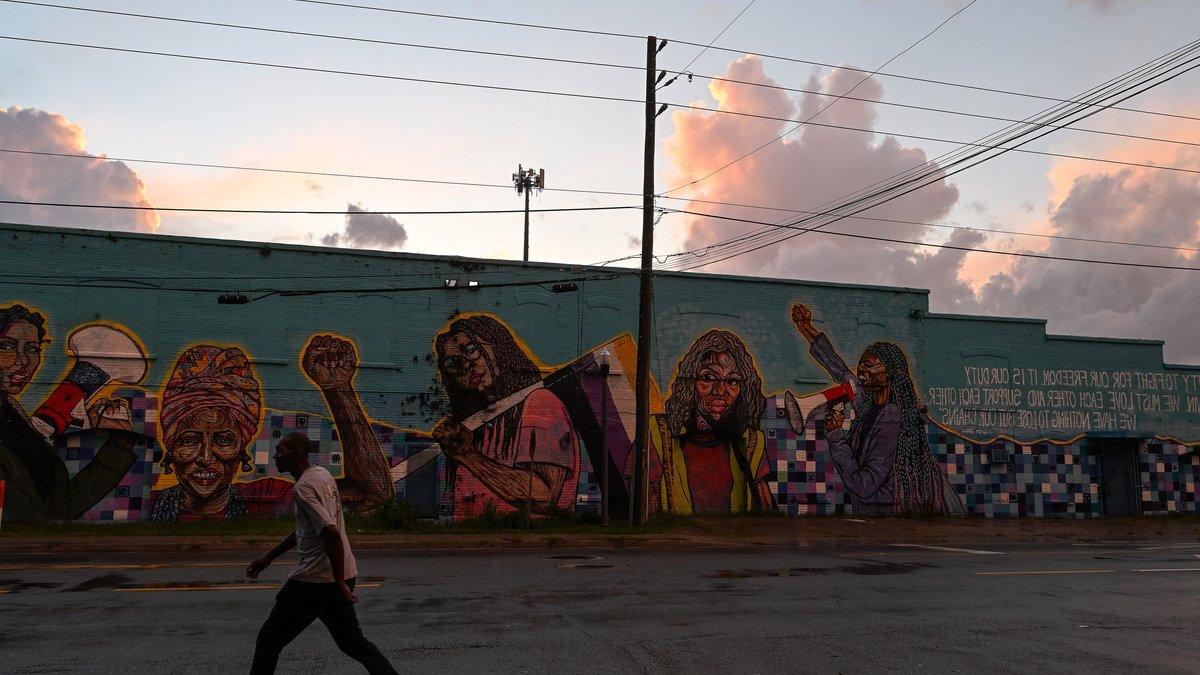
Gunfire in Florida disproportionately targets young Black and Latino children, a grim reality revealed by a new analysis of hospital data. In Jacksonville, the city has three ZIP codes that rank among the 10 worst in the state for firearm injuries involving children. The data shows that from 2018 to 2024, more than 4,000 children 17 or younger were hospitalized for gunshot wounds across the state, averaging roughly 1.5 such cases per day.
Two-year-old A’mahri Robinson was murdered in his mother’s arms in March while she was rocking him to sleep in Jacksonville. The toddler was shot in the head with a gun his mother kept for protection. The weapon belonged to Steven Dodson Jr., her boyfriend, who pleaded guilty to murder and aggravated child abuse in June and was sentenced to life in prison.
Related: Medicare GLP-1 Discount Leaves Some Patients Excluded
Jacksonville’s violence is concentrated in racially segregated neighborhoods. These areas are often plagued by pollution from defunct city trash incinerators, garbage-strewn lots, and dilapidated housing. The local leaders have promised to fix these problems for more than 50 years without success. Nearly all the ZIP codes with the highest rates of firearm injuries for children have large Black or Latino populations.
State and local leaders have failed to address the “root causes” of these preventable injuries, such as poverty and lack of opportunity, according to Jeffrey Goldhagen, a pediatrician and former health director for Duval County. He said the Florida Department of Health does not focus on gun violence as a public health threat, despite it being the nation’s leading cause of death for children and teens. The State Health Improvement Plan does not mention guns or efforts to reduce firearm deaths and injuries to young people.
When Surgeon General Vivek Murthy declared firearm violence a public health crisis in 2024, Governor Ron DeSantis called the advisory an “unconstitutional power-grab.” The governor said Florida would not follow the advisory, which recommended universal background checks and secure storage requirements. A spokesperson for DeSantis declined to answer questions about the governor’s policies.
Related: Iron-rich millet boosts toddler health safely
Most officials with the authority to address this crisis refused to talk to KFF Health News about the toll on Jacksonville’s children. This included the Florida health department, Governor DeSantis, Mayor Donna Deegan, and 18 of 19 members of the Jacksonville City Council. Only Council member Jimmy Peluso responded, noting that neighborhoods with high rates of firearm injuries among children have felt like the wealth has left them and that the city did not come in to do the necessary work.
Gun violence victims and their families face increased risks of depression, anxiety, and post-traumatic stress disorder. Local governments have historically pushed industrial plants, oil refineries, and highways through Black neighborhoods. Research has linked these environmental factors to increased risks of cardiovascular and respiratory diseases, cancer, preterm births, and gun violence. However, the Florida Department of Health does not track gun violence as a public health threat, leaving a gap in understanding how environmental stressors interact with firearm injuries.


